
How to Handle Match Nerves — A Guide for Players and Parents During Team Tennis Season
Team tennis season is exciting — new teammates, matches, and competition.
It can also be emotionally challenging, especially for young players.
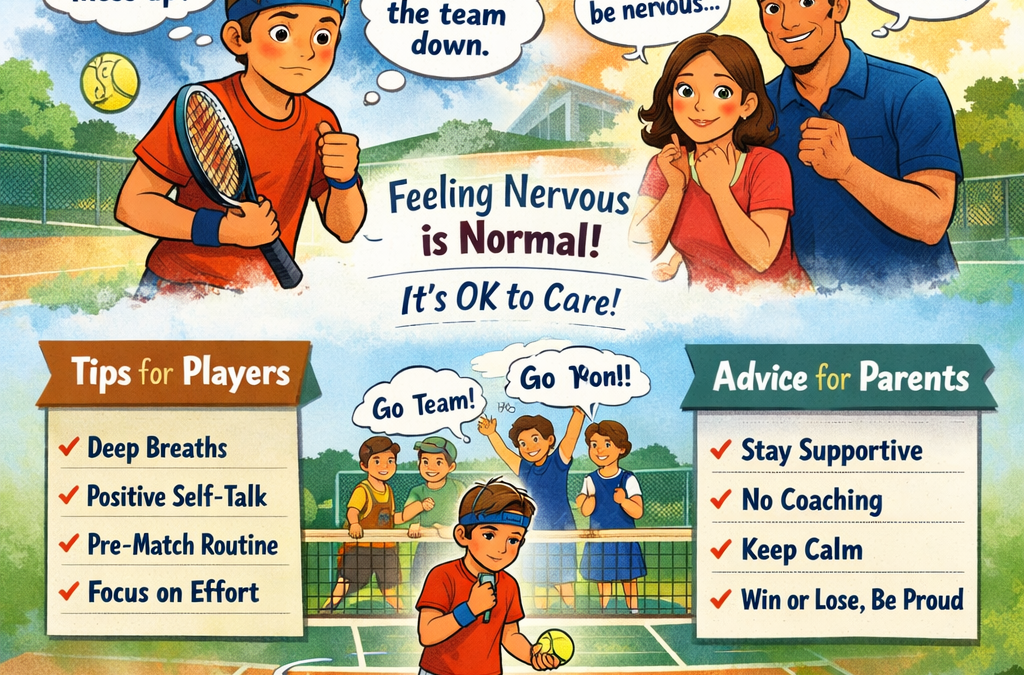
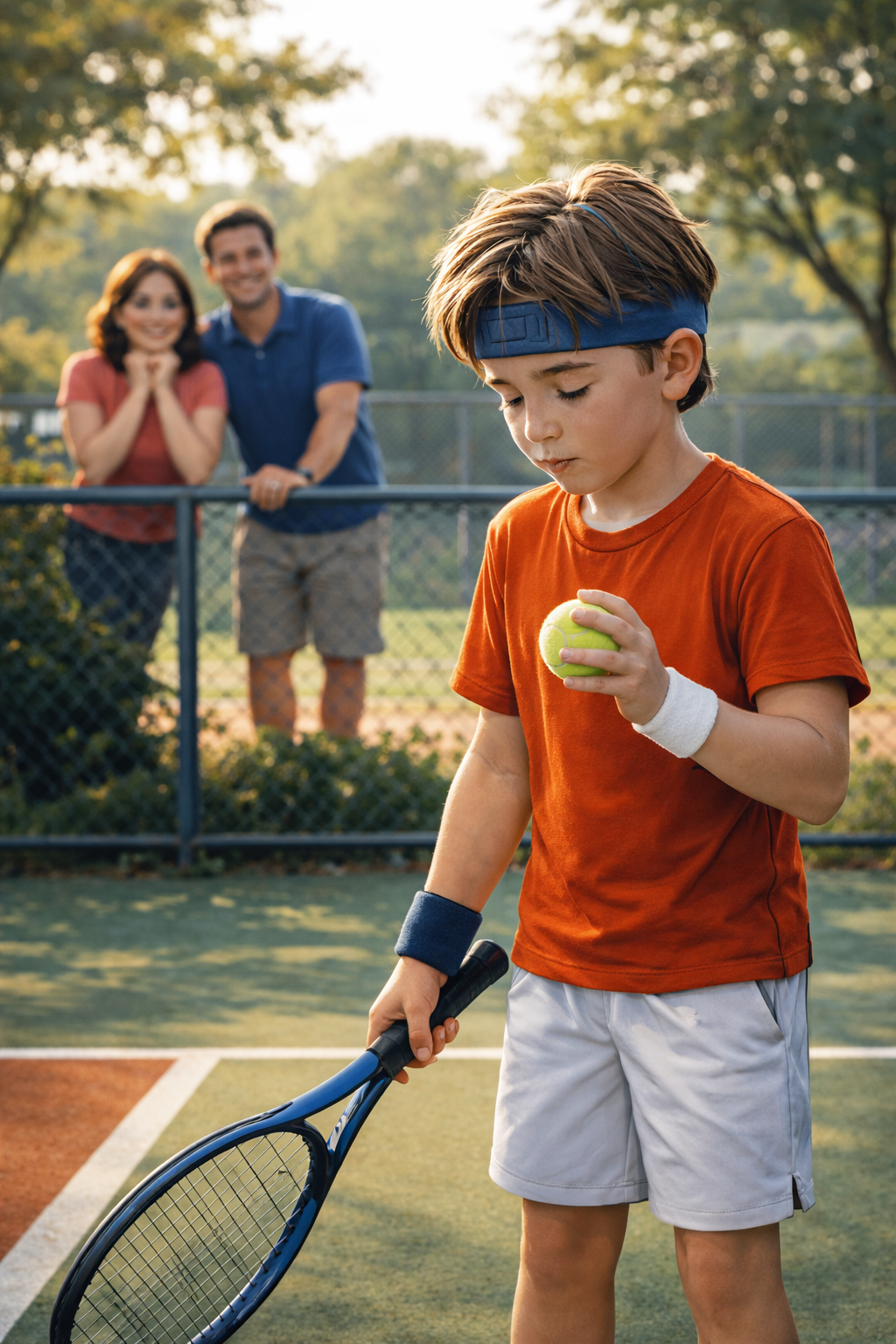
Feeling nervous before matches is completely normal. In fact, it usually means the player cares and wants to do well.
At MO Tennis Training, we focus not only on skill development but also on helping children build confidence, resilience, and a healthy relationship with competition.
Why Players Feel Nervous
Children may worry about:
- Letting their team down
- Making mistakes in front of others
- Disappointing parents or coaches
- Playing unfamiliar opponents
- Fear of losing
Physical symptoms can include stomach aches, tension, or trouble focusing.
These reactions are part of the body’s natural stress response, not a sign of weakness.
How Players Can Manage Pre-Match Nerves
Establish a simple routine
Familiar actions create calm:
- Dynamic warm-up
- Light hitting
- Controlled breathing
- Positive self-talk
- Visualization of simple patterns
Focus on effort, not outcome
Encourage goals such as:
- Moving feet consistently
- Staying positive
- Competing for every ball
- Recovering quickly after mistakes
During the Match: Stay Present
Young players often struggle emotionally more than technically.
Helpful strategies include:
- Using a between-point routine
- Taking a deep breath after each point
- Focusing on the next play, not past mistakes
- Maintaining active body language
Understanding Team Pressure
In team matches, players often feel responsible for the entire result.
Remind them that:
- Every match contributes, but no single player determines everything
- Effort matters more than outcome
- Supporting teammates is part of success
The Parent’s Role
Parents play a critical role in shaping how children experience competition.
During matches, parents should provide emotional support, not coaching.
Helpful behaviors include:
- Staying calm regardless of score
- Offering encouragement without technical instruction
- Allowing coaches to handle strategy
- Modeling composure and perspective
Children are highly sensitive to parental reactions.
What to Say Before Matches
Keep it simple:
✔ “Have fun.”
✔ “Compete hard.”
✔ “I love watching you play.”
✔ “I’m proud of you.”
Avoid outcome-based pressure.
What to Say After Matches
The ride home is often the most emotional time.
Start with open, supportive questions:
✔ “How did it feel out there?”
✔ “What did you enjoy most?”
Allow the child to process before offering feedback.
Our Goal at MO Tennis Training
Competition should build confidence, not fear.
We aim to help players learn how to:
- Handle pressure
- Stay resilient
- Support teammates
- Enjoy the process of improvement
These skills extend far beyond tennis.
By Michelle Okhremchuk